Support our educational content for free when you purchase through links on our site. Learn more
10 Affordable Sustainable Handbag Brands for Everyday Use 🌿

Yes—affordable sustainable handbag brands for everyday use do exist, including BAGU, Quince, ABLE, and The Sak. The smartest pick isn’t simply the bag with the greenest-sounding label: it’s the one with clear material details, sturdy construction, and a shape you’ll reach for again and again.
We’ve seen a practical tote beat a beautiful-but-fussy purse in the real world: one stylist’s favorite daily carry had room for a water bottle, a notebook, and the small items that mysteriously multiply by lunchtime. That’s the everyday test—because a bag you actually use for years can be a better choice than one that stays pristine in your closet.
Our shortlist covers recycled-nylon styles, leather options, upcycled materials, and plant-based alternatives. We’ll help you compare the trade-offs, spot vague sustainability claims, and find a bag that fits both your routine and your budget.
Key Takeaways
- Start with your routine: Choose a tote, crossbody, shoulder bag, or backpack that fits what you carry every day.
- Check the specific product: Materials, manufacturing details, and sustainability claims can vary from one bag to another—even within the same brand.
- Compare the trade-offs: Recycled synthetics are still synthetic; plant-based alternatives may contain binders or coatings; leather raises its own sourcing and care questions.
- Prioritize longevity: Sturdy stitching, comfortable straps, repair options, and versatile design can help a handbag stay in regular use.
- Consider secondhand: A well-kept pre-owned bag can extend the life of something already made.
- Explore the brands: BAGU | Quince | ABLE | The Sak | Cuyana | HYER GOODS | Allégorie
Table of Contents
- ⚡ Quick Tips and Facts
- 🌿 What Makes an Everyday Handbag Sustainable?
- Materials: Recycled, Plant-Based, and Responsibly Sourced
- Ethical Production, Supply Chains, and Certifications
- Durability, Repairability, and End-of-Life Impact
- 👜 10 Affordable Sustainable Handbag Brands to Know
- 1. BAGU: Recycled Nylon Totes and Everyday Bags
- 2. Quince: Accessible Leather and Recycled-Fabric Styles
- 3. ABLE: Leather Bags with a Focus on Women’s Employment
- 4. The Sak: Crochet, Leather, and Recycled Materials
- 5. Sézane: Timeless Designs and Responsible Sourcing
- 6. Cuyana: Long-Wearing, Minimalist Leather Bags
- 7. HYER GOODS: Upcycled Luxury-Leather Handbags
- 8. Allégorie: Plant-Based Bags Made from Fruit Waste
- 9. behno: Thoughtful Leather Goods and Ethical Production
- 10. VIVAIA: Recycled Materials and Lightweight Bags
- 💡 How to Compare Sustainable Handbag Brands
- A Quick Comparison of Materials, Styles, and Everyday Use
- What to Check Before You Buy
- 🧵 Best Sustainable Handbag Materials for Daily Carry
- Recycled Nylon and Recycled Polyester
- Organic Cotton, Canvas, and Recycled Cotton
- Recycled, Upcycled, and Responsibly Sourced Leather
- Plant-Based Leather Alternatives: Benefits and Trade-Offs
- 🎒 Choosing the Right Everyday Bag for Your Routine
- Totes, Crossbody Bags, Backpacks, and Shoulder Bags
- Work, Comuting, Travel, and Errand-Friendly Features
- Capacity, Comfort, Weather Resistance, and Organization
- 🔎 How to Spot Greenwashing in Sustainable Handbags
- Questions to Ask About Materials and Manufacturing
- Certifications and Transparency Worth Checking
- 🛠️ Make an Affordable Handbag Last Longer
- Cleaning and Storage Tips by Material
- Repairs, Resale, and Responsible Recycling
- 🛍️ Where to Find Affordable Sustainable Handbags
- Brand Websites, Secondhand Shops, and Resale Platforms
- How to Judge Value Without Chasing the Lowest Price
- ❓ Common Questions About Affordable Sustainable Handbags
- ✅ Conclusion
- 🔗 Recommended Links
- 🙋 FAQ
- 📚 Reference Links
⚡️ Quick Tips and Facts
Yes, affordable sustainable handbags for everyday use exist—but “sustainable” is not a magic label, and “affordable” depends on your budget, how often you’ll carry the bag, and how long it lasts. For more brands and materials, start with our guide to sustainable handbag brands.
| Quick question | Stylist answer |
|---|---|
| Best easy-care everyday tote? | Try a recycled-nylon style from BAGU. It’s lightweight and practical, though recycled synthetic fabric is still plastic-based. |
| Best for a one-bag routine? | Look for a crossbody or tote with a secure closure, comfortable straps, and enough room for your daily essentials. ABLE and Quince offer leather options to compare. |
| Best way to spend less? | Check a brand’s own sale or secondhand listings, then verify condition, materials, and return policy. Buying used can extend an existing bag’s life, but it doesn’t make every listing a bargain. |
| What does “sustainable” actually mean? | Check the specific material, where and how the bag is made, and whether the brand gives useful details. The FTC Green Guides caution businesses against broad, unqualified environmental claims. |
| What should you prioritize? | A bag you’ll use often, can maintain, and won’t need to replace quickly. Cost per wear matters more than a persuasive leaf icon. |
Quick facts worth remembering
- Recycled content is not the same as biodegradable. Recycled nylon and polyester can reduce reliance on virgin material, but remain synthetic fibers.
- Plant-based leather alternatives vary. Some combine plant-derived content with synthetic binders or coatings; check the product’s material breakdown instead of relying on the word “vegan.”
- Leather is not automatically sustainable—or automatically unsustainable. Traceability, tanning, durability, repair, and how the material is sourced all matter.
- Ethical claims are not environmental proof. A brand may have a strong labor story without publishing detailed data about a bag’s environmental footprint.
- A secondhand bag may be your lowest-impact option, especially if it’s in good condition and suits your routine. The EPA’s waste-prevention guidance explains why reuse helps conserve resources and reduce waste.
🌿 What Makes an Everyday Handbag Sustainable?
We’ve learned to look beyond the marketing phrase and ask a more useful question: What is this bag made of, who made it, and will I still want to carry it next year? A credible answer usually involves several factors rather than one supposedly perfect material.
Materials: Recycled, Plant-Based, and Responsibly Sourced
| Material | Potential benefits | Trade-offs to check |
|---|---|---|
| Recycled nylon or polyester | Lightweight, often easy to clean, and may use recycled feedstock. | Still synthetic; abrasion, coatings, blends, and end-of-life options vary. |
| Coton canvas | Familiar, repairable, and often washable if care instructions allow. | Conventional cotton can be resource-intensive; canvas may need a liner or coating for durability. |
| Recycled cotton | Uses reclaimed fiber and can reduce demand for newly produced cotton. | Fiber length and strength can vary; ask how recycled content is measured. |
| Leather | Can be long-lasting and repairable when well constructed. | Animal-derived; tanning, chemical management, sourcing, and worker protections matter. |
| Upcycled leather or deadstock fabric | Uses material that already exists, potentially keeping it in circulation. | Supply and consistency may be limited; ask how much of the bag is actually upcycled. |
| Plant-based alternatives | May incorporate agricultural byproducts or plant-derived content. | Often blended with polyurethane or other binders; “plant-based” does not necessarily mean plastic-free. |
The Textile Exchange materials resources and the Leather Working Group’s standards and guidance can help you understand material and processing claims. Neither turns a product into a guaranteed low-impact purchase on its own: the finished bag’s construction and lifespan still count.
Ethical Production, Supply Chains, and Certifications
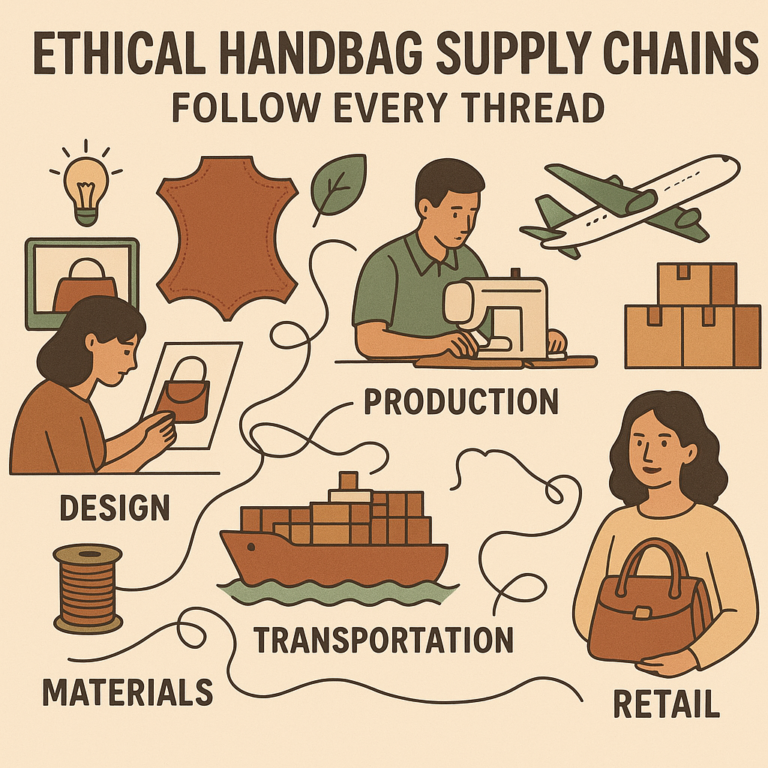
A thoughtful brand should be able to tell you more than “made responsibly.” Look for the factory or production region, material suppliers, worker standards, and any independent certification that applies to the specific product or facility.
Useful checks include:
- Does the brand identify where the bag is made?
- Does it describe worker protections or factory oversight?
- Are material claims specific—such as a stated recycled-content percentage?
- Does a certification apply to the bag, the material, or only a supplier?
- Can you find the claim in a current report or product page?
Certifications can provide helpful signals, but read their scope. The Fairtrade Standards address particular supply chains and requirements; they are not a blanket certification for every handbag bearing an ethical-sounding story.
Durability, Repairability, and End-of-Life Impact
For daily use, sustainability has a very practical side: a broken strap can turn a favorite bag into a closet resident. Check stitching at strap attachments, zipper quality, lining, base reinforcement, hardware, and whether the brand offers repairs or replacement parts.
Before buying, look for:
- Reinforced handles and stress points.
- A closure that suits your commute—ziper for crowded transit, magnetic snap for quick access, or a flap with a secure fastening.
- Care instructions you can realistically follow.
- Repair or resale options, if available.
- A shape you’ll use with more than one outfit.
The Ellen MacArthur Foundation’s circular-economy resources explain why extending product use and designing for circularity matter. That doesn’t mean every bag needs to be indestructible; it means the brand should not treat repair and longevity as afterthoughts.
👜 10 Affordable Sustainable Handbag Brands to Know
These brands are starting points for comparison, not a blanket certification list. Materials, manufacturing details, product lines, and availability can change, so check the current product page before buying. We’re also careful with the word affordable: a durable bag used often may offer better value than a cheaper one that fails quickly, but your budget comes first.
| Brand | What to explore | Everyday strengths | Questions to ask |
|---|---|---|---|
| BAGU | Recycled-nylon bags and totes | Lightweight, casual, easy to carry | What percentage is recycled? How does the style handle weight and wear? |
| Quince | Leather and other bag styles | Clean, versatile silhouettes | What is the leather source and care policy for the exact bag? |
| ABLE | Leather crossbodies and totes | Useful shapes and a stated focus on women’s employment | What production details and repair options are published? |
| The Sak | Crochet, leather, and select recycled-material styles | Relaxed everyday shapes and varied textures | Which sustainability claims apply to the particular style? |
| Sézane | Leather and seasonal accessories | Polished, versatile designs | What material and sourcing information is available for this item? |
| Cuyana | Minimalist leather bags | Classic forms designed for repeat wear | Does the style offer repair, care, or resale support? |
| HYER GOODS | Upcycled leather goods | Distinctive materials and small-run character | What is upcycled, and what new components are included? |
| Allégorie | Plant-based material designs | A vegan-focused alternative to conventional leather | What is the full material composition and care guidance? |
| behno | Leather handbags | Refined, practical silhouettes | What sourcing and manufacturing details are provided for the bag? |
| VIVAIA | Recycled-material accessories and bags | Lightweight, casual options | Which components are recycled, and what is the bag’s construction? |
1. BAGU: Recycled Nylon Totes and Everyday Bags
BAGU is worth a look if your ideal everyday bag is light, casual, and unfussy. Its assortment includes totes and other styles made with recycled nylon; confirm the current material details on the product page, since materials can vary by design.
What works well
- Low-fuss shapes for groceries, errands, and commuting.
- Lightweight fabric can be easier to carry than a rigid leather tote.
- A practical choice for people who want a bag that can handle everyday scuffs.
Potential drawbacks
- Nylon is synthetic, even when recycled.
- Soft totes may not protect a laptop or keep a water bottle upright.
- A roomy open-top bag can become a portable junk drawer without a pouch organizer.
We like it for a casual rotation, but would check strap comfort and closure before using it as a work bag. For pockets and layout inspiration, see our handbag organizing tips.
👉 Shop BAGU:
2. Quince: Accessible Leather and Recycled-Fabric Styles
Quince offers a range of bags, including leather styles. The streamlined designs may suit a capsule wardrobe, but don’t assume every product has the same material sourcing or sustainability profile. Check the individual listing for construction, care, and origin information.
What works well
- Simple silhouettes that can move from casual outfits to workwear.
- Multiple styles make it easier to compare capacity and strap options.
- A useful brand to consider if you want a leather bag without prominent logos.
Potential drawbacks
- Leather sourcing and tanning details should be checked style by style.
- Minimalist design does not, by itself, establish a low environmental impact.
- Confirm the bag’s interior layout if you carry a laptop, keys, and small essentials.
👉 Shop Quince:
3. ABLE: Leather Bags with a Focus on Women’s Employment
ABLE is known for its stated commitment to women’s employment and offers leather bags in practical shapes. That labor-focused story is meaningful, but it is not a substitute for checking material sourcing, production details, and product construction.
What works well
- Crossbody and tote silhouettes can suit busy daily routines.
- Leather may develop character with use and can often be cared for or repaired.
- The brand’s employment mission gives shoppers a labor-related dimension to investigate.
Potential drawbacks
- Leather is not vegan and may not suit every shopper.
- Care needs differ by finish; avoid assuming a leather bag is weatherproof.
- Read the product details for lining, strap adjustment, and closure.
👉 Shop ABLE:
4. The Sak: Crochet, Leather, and Recycled Materials
The Sak has a broad mix of relaxed silhouettes, including crochet and leather bags, as well as styles that may feature recycled materials. The exact material mix matters, so read the listing rather than applying one collection’s claim to every bag.
What works well
- Casual shapes can be comfortable for errands and day-to-day use.
- The range includes different textures and carrying styles.
- A good place to compare slouchy shoulder bags with more structured options.
Potential drawbacks
- Crochet and soft shapes may stretch or lose structure if overloaded.
- Not every style has the same sustainability attributes.
- Check lining and closure if you need a work-ready bag.
👉 Shop The Sak:
5. Sézane: Timeless Designs and Responsible Sourcing
Sézane’s bag collection offers polished designs that can work across seasons. The brand publishes information about its broader commitments, but a brand-wide statement is not proof that every bag has the same materials or impact.
What works well
- Refined shapes can pair with casual and office outfits.
- A versatile design may earn more use than a highly trend-led purchase.
- Worth comparing if you want a dressier everyday bag.
Potential drawbacks
- Check leather type, lining, production details, and care guidance for each item.
- Some shapes may prioritize appearance over capacity or comfort.
- Review the return and repair policies before committing.
👉 Shop Sézane:
6. Cuyana: Long-Wearing, Minimalist Leather Bags
Cuyana focuses on streamlined accessories. Minimalism can help a bag stay wearable beyond one season, but the real test is whether the leather, stitching, handles, and interior work for your life.
What works well
- Understated shapes are easy to style repeatedly.
- A structured tote can suit work and travel if its dimensions fit your needs.
- A restrained design may be a better long-term choice than a bag you’ll tire of quickly.
Potential drawbacks
- Leather needs care and may show scratches or water marks.
- Check weight before buying; a large bag can feel heavy before you put anything in it.
- Confirm laptop fit and closure details rather than relying on product photos.
👉 Shop Cuyana:
7. HYER GOODS: Upcycled Luxury-Leather Handbags
HYER GOODS makes bags using upcycled leather. Reusing existing material is an appealing way to rethink waste, but ask what portion of the finished bag is upcycled and what components are newly made.
What works well
- Upcycled material gives pieces a distinctive, often limited-run character.
- A useful option for shoppers drawn to leather but interested in reuse.
- Smaller batches can mean unusual color or texture combinations.
Potential drawbacks
- Material availability may affect consistency between styles.
- Upcycled leather is still leather and may still require maintenance.
- Verify what is upcycled, especially for lings, straps, and hardware.
👉 Shop HYER GOODS:
8. Allégorie: Plant-Based Bags Made from Fruit Waste
Allégorie develops plant-based material alternatives and is a brand to investigate if you want a vegan bag. The crucial question is not just “Is it plant-based?” but “What else is in the material, and how does it hold up?”
What works well
- Offers an alternative for people avoiding animal-derived leather.
- Distinctive material story may appeal to shoppers who want something different.
- Product-specific composition details can help you compare it with other vegan options.
Potential drawbacks
- Plant-derived content may be blended with synthetic binders or coatings.
- Long-term durability and repair options depend on the exact construction.
- Check cleaning instructions; some alternative materials cannot be treated like leather.
👉 Shop Allégorie:
9. behno: Thoughtful Leather Goods and Ethical Production
behno is another leather-bag label to compare if you value considered design and production messaging. Look for specific, current information about the factory, materials, and worker standards, rather than relying on a general ethical-fashion description.
What works well
- Polished styles can transition between work and weekends.
- Structured options may offer a more organized daily carry.
- A good candidate for shoppers who prefer leather and a refined silhouette.
Potential drawbacks
- Leather sourcing and tanning details still deserve scrutiny.
- Structured bags can be heavier than soft fabric alternatives.
- Check interior pockets, strap drop, and whether the closure fits your routine.
👉 Shop behno:
10. VIVAIA: Recycled Materials and Lightweight Bags
VIVAIA is known for using recycled materials in parts of its assortment. Look at each bag’s material breakdown and construction: a recycled component is useful information, not a complete lifecycle report.
What works well
- Lightweight styles may suit errands and commuting.
- Casual silhouettes can be easy to pair with everyday clothes.
- A potential vegan-friendly choice, depending on the specific product.
Potential drawbacks
- Recycled synthetics remain synthetic.
- Check how the straps, lining, and hardware are made—not just the outer fabric.
- Confirm the bag is roomy and supportive enough for your actual carry load.
👉 Shop VIVAIA:
💡 How to Compare Sustainable Handbag Brands
A brand comparison gets more useful when you compare the specific bag, not just the brand’s reputation. We’ve seen shoppers fall for a beautiful tote, then discover it has no secure closure or weighs a ton when packed. Pretty is lovely; shoulder comfort is lovelier after hour three.
A Quick Comparison of Materials, Styles, and Everyday Use
| Your priority | Look for | Watch out for |
|---|---|---|
| Lightweight errands bag | Recycled nylon, cotton canvas, adjustable straps | Thin straps, weak seams, open tops |
| Work tote | Reinforced base, secure closure, laptop dimensions, interior pockets | Excessive weight, no padding, narrow shoulder drop |
| Hands-free commute | Crossbody with adjustable strap and zipped compartment | Strap that twists, cramped interior, hardware that digs in |
| Vegan materials | Full material composition and care guide | “Vegan” used as shorthand for “sustainable” |
| Long-term leather bag | Clear sourcing, sturdy stitching, care or repair guidance | Unclear tanning or sourcing claims |
| Secondhand find | Authenticated listing, condition photos, return terms | Hidden damage, counterfeit risk, missing measurements |
What to Check Before You Buy
Use this quick step-by-step check:
- Write down your daily carry. Phone, wallet, keys, water bottle, lunch, tablet, laptop—be honest. Your bag is not required to become a tiny moving van.
- Measure your largest item. Compare it with the bag’s published dimensions, including the opening.
- Check the weight and strap drop. A roomy bag that hangs awkwardly can become an expensive exercise in regret.
- Read the materials line by line. Note shell, lining, coating, trims, and hardware.
- Find the production information. Look for a named country or facility and clear labor standards.
- Review care and repair options. A simple repair policy can add practical value.
- Check the return window and shipping terms. You need a way to assess comfort and capacity at home.
- Compare cost per wear. Divide the cost by the realistic number of uses—not an imaginary lifetime of daily use.
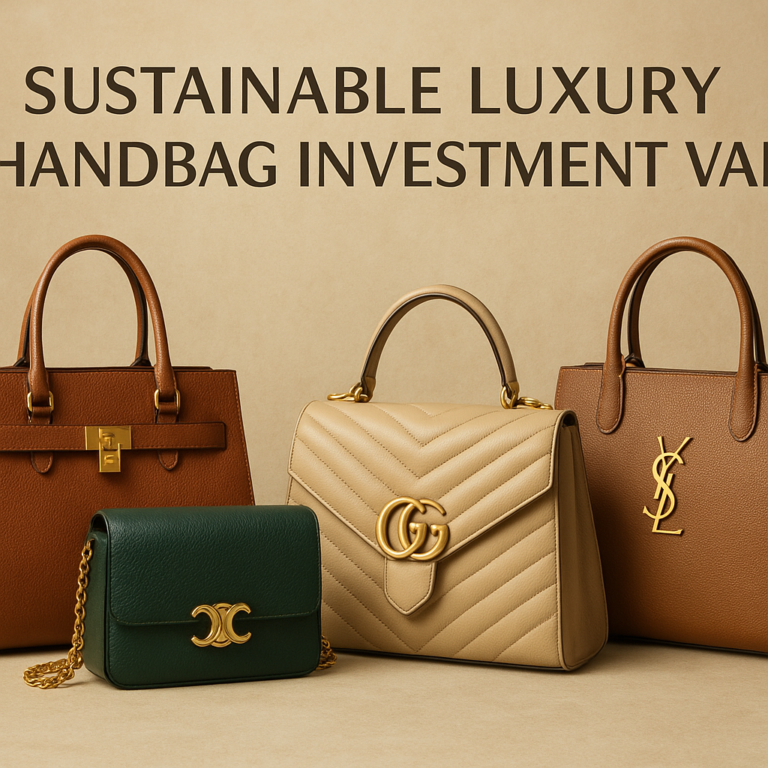
The FTC’s guidance on environmental marketing is a useful reminder to be skeptical of broad claims that lack specific evidence. And if you love luxury styling, remember the first video’s central point: a bag’s value is connected to how often and how long you use it, not just its label. That perspective is useful, but affordable luxury is not the same as sustainability; check materials and production separately. See our designer purse brands and affordable purse brands guides for more style comparisons.
🧵 Best Sustainable Handbag Materials for Daily Carry
There is no universal winner. The best material is the one that fits your values and survives your routine. A canvas tote may be perfect for groceries; a well-made leather crossbody may better for a daily commute; a recycled-nylon bag may win when rain and easy care matter.
Recycled Nylon and Recycled Polyester
Best for: Lightweight totes, casual crossbodies, and bags that need low-fuss care.
Advantages
- Often lighter than leather.
- Can be durable and easy to wipe clean.
- Recycled content may reduce demand for virgin feedstock.
Trade-offs
- Still synthetic and may shed microfibers during use or washing.
- Coatings and mixed materials can make recycling difficult.
- “Made with recycled material” should be accompanied by a specific percentage and product scope.
The European Environment Agency’s textiles overview discusses the environmental pressures associated with textile production and consumption. That wider context matters: recycling is helpful, but buying fewer, better-used items also matters.
Organic Cotton, Canvas, and Recycled Cotton
Best for: Casual totes, book bags, and everyday carry where a soft, relaxed shape works.
Advantages
- Easy to understand and often straightforward to maintain.
- Can be repaired with ordinary sewing skills.
- Canvas offers a less polished, more casual look that takes everyday wear in stride.
Trade-offs
- Cotton farming and processing still have environmental impacts.
- Thin canvas may sag or tear under heavy loads.
- Coatings and mixed-fiber lings can affect cleaning and end-of-life options.
Check for a clear fiber breakdown and follow the care label. A canvas bag that is washable only in theory—because the lining or trim cannot handle water—doesn’t make your life easier.
Recycled, Upcycled, and Responsibly Sourced Leather
Best for: Shoppers who want a structured, repairable bag and are comfortable with animal-derived material.
Advantages
- Can be long-lasting with proper care.
- Scratches may sometimes be repaired or softened by professional care.
- Upcycled leather uses existing material rather than relying exclusively on newly produced leather.
Trade-offs
- Leather has animal-welfare and environmental considerations.
- Tanning methods, chemical management, and traceability vary.
- “Upcycled” can describe a portion of a product, not necessarily every component.
The Leather Working Group provides information about leather supply-chain standards. Use it as one checkpoint, not a shortcut: ask whether the bag’s specific leather or tannery is covered.
Plant-Based Leather Alternatives: Benefits and Trade-Offs
Best for: Shoppers seeking non-animal materials and willing to check the composition carefully.
Plant-based alternatives may use fruit or other agricultural byproducts, but the finished material can include synthetic binders, backings, or coatings. That does not make the material automatically bad; it means “plant-based” describes only part of the story.
Before buying, check:
- The percentage of plant-derived content.
- Whether polyurethane or another synthetic is used.
- Cleaning instructions and expected wear.
- Whether the brand offers repair, take-back, or recycling options.
- How the product handles heat, moisture, and abrasion.
🎒 Choosing the Right Everyday Bag for Your Routine
We once helped a commuter choose between two bags: one looked perfect in a mirror, the other fit a water bottle, lunch, and a small laptop without straining the straps. She chose the second—and used it for years. The best sustainable purchase is usually the one that works in real life, not just in the dressing-room glow.
Totes, Crossbody Bags, Backpacks, and Shoulder Bags
| Bag type | Great for | Potential downside |
|---|---|---|
| Tote | Work, shopping, and carrying larger items | Can be heavy; open tops need organization |
| Crossbody | Comuting, travel, and hands-free errands | Small styles may strain your shoulder if overloaded |
| Backpack | Even weight distribution and longer walks | Can feel bulky and less polished in some workplaces |
| Shoulder bag | Easy access and a classic everyday look | Weight rests one shoulder; strap may slip |
| Belt or mini bag | Essentials-only days and travel | Limited capacity; not a full work bag |
If you’re drawn to iconic silhouettes, browse our iconic handbags guide—but use the same practical checklist for every style.
Work, Comuting, Travel, and Errand-Friendly Features
For work
- Laptop sleeve or enough space for a protective case.
- Secure top closure.
- Interior pockets that separate small items.
- Comfortable handles and enough strap drop for a coat.
For commuting
- Zipped pocket for transit cards and keys.
- Crossbody or backpack option for hands-free movement.
- Weather-appropriate material.
- A bag that stays close to your body in crowds.
For travel
- Easy-access pocket for documents.
- Secure closure and adjustable strap.
- Lightweight construction before packing.
- Cleanable surface for airport floors and unexpected spills.
For errands
- Room for reusable shopping bags and a water bottle.
- A closure that does not require both hands.
- A washable or wipeable material, if the care instructions allow it.
Capacity, Comfort, Weather Resistance, and Organization
Try this simple “real-life packing test” before you buy:
- List your essentials and compare them with the bag’s dimensions.
- Check the opening width, not only the exterior measurements.
- Look for a stable base if you carry a bottle or lunch container.
- Assess strap width and padding if the bag will be heavy.
- Check care instructions for rain exposure. Water-resistant is not the same as waterproof.
- Plan for organization. Use a small pouch for loose items rather than assuming every bag needs ten pockets.
For practical storage ideas, our handbag organizing tips can help keep a roomy tote from turning into a black hole with handles. 🕳️
🔎 How to Spot Greenwashing in Sustainable Handbags
Greenwashing often relies on broad, feel-good words—conscious, eco, responsible, earth-friendly—without saying what they mean. The FTC Green Guides advise businesses to qualify environmental claims and avoid misleading consumers.
Questions to Ask About Materials and Manufacturing
- What percentage of the bag is recycled or plant-based?
- Does the claim apply to the entire bag or just the shell?
- Where is the product made?
- Are suppliers or factories identified?
- What kind of leather, textile, coating, and lining are used?
- Does the company publish current information about labor or environmental practices?
- Can the bag be repaired, resold, or taken back?
A specific claim is more useful than a poetic one. “The outer fabric contains recycled nylon” gives you something to assess; “made for a greener future” does not.
Certifications and Transparency Worth Checking
Certifications can help verify particular standards, but they do not all measure the same things.
| Signal | What it may help verify | What it does not automatically prove |
|---|---|---|
| Material certification | A defined material or process standard | That the whole bag is sustainable |
| Factory or labor standard | Workplace requirements within its scope | That every supplier is covered |
| Leather supply-chain standard | Specific environmental or management practices | That the bag is vegan or impact-free |
| Brand sustainability report | Published goals, activities, or metrics | That goals have been met for every product |
For an overview of textile standards and materials, consult Textile Exchange. For leather-related sourcing and processing information, consult the Leather Working Group. If a brand cites a certification, click through to confirm what was certified, by whom, and when.
🛠️ Make an Affordable Handbag Last Longer
A little care can stretch the useful life of a bag. We say this after watching a beloved tote survive daily commutes because its owner emptied it, cleaned it, and repaired a loose seam early—rather than waiting until the handle was hanging on by one heroic stitch.
Cleaning and Storage Tips by Material
| Material | Basic care approach | Avoid |
|---|---|---|
| Leather | Follow the maker’s care guidance; use suitable products and test a hidden area first. | Soaking, harsh cleaners, or untested oils |
| Canvas | Spot-clean or wash only if the care label permits; air-dry fully. | High heat that can shrink or damage coatings |
| Nylon | Wipe with a soft damp cloth if allowed; check care instructions before washing. | Abrasive scrubbing and unapproved solvents |
| Plant-based alternatives | Use the manufacturer’s specified cleaner and cloth. | Assuming every “vegan leather” tolerates the same products |
Keep bags dry before storing them, avoid overfilling, and use a dust bag or clean pillowcase if appropriate. For more storage and organization ideas, visit Purse Brands’ handbag organizing tips.
Repairs, Resale, and Responsible Recycling
When a bag needs attention:
- Stop using it before a small issue becomes a major failure.
- Ask the brand about repairs, replacement straps, or hardware.
- Get an estimate from a local cobler or repair shop.
- Resell or donate a bag that is still useful and safe to carry.
- For a damaged bag, separate components only if local rules and facilities accept them.
The EPA’s reuse and recycling guidance favors reducing and reusing where possible. Mixed-material bags can be difficult to recycle, so repair and continued use are often the more realistic first steps.
🛍️ Where to Find Affordable Sustainable Handbags
A lower-cost handbag does not have to mean a lower standard for evidence. Compare the brand’s own product page, secondhand listings, and resale options. If you’re exploring a broader range, our affordable purse brands category is a handy starting point.
Brand Websites, Secondhand Shops, and Resale Platforms
Brand websites
- Best for current material and care information.
- Check sales, outlet sections, return rules, and repair policies.
- Save the product details for reference in case you need aftercare.
Secondhand and resale
- Search by brand, style name, material, and condition.
- Ask for close-up photos of strap attachments, corners, lining, and hardware.
- Check authentication and return policies for designer bags.
- Compare the resale listing with the brand’s product information.
Local resale and vintage shops
- Let you inspect weight, condition, and strap comfort in person.
- Can make repairs and negotiation more straightforward.
- Offer the bonus of no shipping, if the shop is nearby.
A competitor’s affordable-luxury video makes a useful style point: value can come from frequent wear rather than a prestige logo. We agree, with one extra caveat: frequent wear improves value, but it does not verify sustainability claims. For designer resale inspiration, see Designer Spotlight.
How to Judge Value Without Chasing the Lowest Price
Use a simple scorecard before you decide:
- Daily usefulness: Will it fit your routine?
- Build quality: Are seams, straps, lining, and hardware convincing?
- Material transparency: Can you identify what it’s made of?
- Production transparency: Does the brand provide meaningful details?
- Care and repair: Can you maintain it?
- Versatility: Does it work with multiple outfits and settings?
- Secondhand potential: Would someone else plausibly want it later?
A low-cost bag that you replace quickly may be less economical than a thoughtfully chosen bag you use for years. But don’t stretch your budget for a sustainability claim you cannot verify. Buy the best-supported option you can comfortably afford, then use it well.
❓ Common Questions About Affordable Sustainable Handbags

Are there affordable sustainable handbag brands for everyday use?
Yes. Brands such as BAGU, Quince, ABLE, and The Sak are worth comparing for everyday styles. Their materials and sustainability details differ by product, so check each bag’s composition, construction, and sourcing rather than treating a brand name as a guarantee.
Which eco-friendly handbag brands offer durable bags for regular use?
Durability depends on the specific bag, not only the label. Look for reinforced strap points, secure stitching, robust hardware, a lining that suits your use, and published care guidance. Compare a recycled-nylon BAGU tote with a leather crossbody from ABLE or Quince based on your actual routine. A soft tote may be ideal for errands, while a structured leather bag may better suit a daily office commute.
What materials should I look for in a sustainable everyday handbag?
There is no single best material for everyone. Recycled nylon can be lightweight and practical; canvas can be repairable and casual; responsibly sourced or upcycled leather can be long-wearing; plant-based alternatives may suit shoppers avoiding animal-derived materials. Check the full material breakdown, including lining, coatings, and trims. A clear percentage and product-specific explanation are more useful than a broad “eco-friendly” claim.
Are vegan handbags a sustainable choice for daily use?
Sometimes, but “vegan” only tells you that animal-derived materials are not used. It does not tell you whether the bag contains recycled content, how it was manufactured, or how long it will last. Some plant-based alternatives include synthetic binders or coatings. Check composition, durability, care requirements, and repair options—and compare those details with leather or textile alternatives according to your priorities.
Which affordable ethical handbag brands offer practical styles for work and travel?
Explore ABLE, Quince, BAGU, and The Sak, then assess the exact style. For work, prioritize laptop fit, a secure closure, and comfortable straps. For travel, look for an adjustable crossbody strap, easy-access pocket, and a lightweight build. Check brand-specific production claims rather than assuming every product shares the same labor standards.
How can I find a sustainable purse that fits my budget and lifestyle?
Start with the items you carry and the situations you need the bag for. Compare current-season products with the brand’s sale section and secondhand listings. Verify condition and return terms, then compare materials, repair options, and construction. A bag that fits your daily routine and is used often can offer better value than a cheaper style that stays in your closet.
What features make an everyday handbag eco-friendly and long-lasting?
Look for clear material information, sturdy seams, reinforced handles, dependable hardware, a practical closure, and care instructions you can follow. Repair support and a versatile design can help extend use. No single feature proves the bag has a low environmental impact, but durability, transparency, and continued use make a stronger case than vague marketing language.
Does Target identify specific sustainable handbag brands or styles?
Target’s corporate article discusses making sustainable choices accessible and gives examples from areas such as apparel and household products. It does not name a particular sustainable handbag brand or provide handbag product specifications. Its example of Universal Thread denim containing recycled cotton should not be assumed to apply to handbags. Read the Target sustainability article for the claims and examples it actually covers.