Support our educational content for free when you purchase through links on our site. Learn more
How to Tell a Good Quality Bag: 12 Expert Secrets Revealed! 👜 (2025)


Ever picked up a handbag and wondered, “Is this truly worth it?” You’re not alone. With countless options flooding the market—from luxury boutiques to fast-fashion outlets—knowing how to spot a good quality bag can feel like decoding a secret language. But here’s a little insider scoop: quality isn’t just about the brand or price tag. It’s in the leather’s texture, the stitching’s precision, the hardware’s weight, and even the lining’s feel.
Take Chloe, one of our Purse Brands™ stylists, who once scored a vintage Céline at a flea market by trusting her instincts and a few key quality checks. That bag? It’s now a prized piece in her collection. Curious how she did it? Keep reading, because we’re unveiling 12 essential elements that every savvy shopper should know to distinguish a lasting, well-crafted bag from a fleeting fad. Plus, we’ll share tips on care, authenticity, and even how to avoid outlet store pitfalls!
Key Takeaways
- Material matters: Look for full-grain or top-grain leather, durable linings, and quality fabrics like coated canvas or nylon.
- Craftsmanship counts: Even, tight stitching and finished edges signal durability.
- Hardware quality: Solid, smooth zippers and custom metal pieces are hallmarks of a good bag.
- Brand reputation and authenticity: Trust established brands or vetted resellers to avoid fakes.
- Feel and function: Comfort, weight balance, and interior organization are key to everyday use.
- Care extends life: Proper storage and maintenance keep your bag looking fabulous for years.
Ready to find your perfect bag? Explore our Designer Purse Brands and Affordable Purse Brands for expert-approved options!
Table of Contents
- ⚡️ Quick Tips and Facts: Your Instant Quality Check!
- 👜 The Enduring Legacy of Quality Handbags: A Brief History of Craftsmanship
- Why Quality Matters: Beyond the Price Tag and Fleeting Trends
- Decoding Durability: 12 Essential Elements to Spot a Truly Good Quality Bag
- 1. Material Mastery: What’s Your Bag Really Made Of? 🧐
- 2. Craftsmanship & Construction: The Devil’s in the Details (and the Stitching!) 🧵
- 3. Hardware Hues: More Than Just Bling – The Metal Test ⚙️
- 4. Handles and Straps: Your Bag’s Lifelines and Comfort Zones 🤲
- 5. The Interior World: Pockets, Organization, and a Pristine Lining 📱
- 6. Brand Reputation & Heritage: Trusting the Makers Behind the Masterpiece 👑
- 7. The “Feel” Test: Sensory Clues to Uncover True Quality 🙌
- 8. Longevity and Maintenance: An Investment That Lasts (with a Little TLC) 💖
- 9. The Price Puzzle: Value vs. Cost – Understanding Your Investment 💰
- 10. Authenticity Checks: Avoiding Fakes and Finding the Real Deal 🕵️♀️
- 11. The “Purse Brands™” Personal Touch: Our Expert Insights and Anecdotes 🌟
- 12. Common Pitfalls: What to Avoid When Buying a Bag ❌
- Making Your Quality Bag Last: Essential Care and Storage Tips 💖
- Conclusion: Your Journey to a Better Bag Starts Now! 🎉
- Recommended Links: Dive Deeper into the World of Quality Handbags 📚
- FAQ: Your Burning Bag Questions Answered 🔥
- Reference Links: Our Sources of Wisdom and Expertise 🌐
⚡️ Quick Tips and Facts: Your Instant Quality Check!
Hey there, savvy shopper! We know you’re busy, so let’s get right to it. Before you dive deep, here’s our “Purse Brands™” cheat sheet for spotting a quality bag in seconds. Keep these in your back pocket for your next shopping trip!
- Trust Your Senses👃: A quality leather bag should have a rich, natural leather scent. If it smells like chemicals or plastic, that’s a major red flag.
- Stitching is Key 🧵: Look closely at the seams. The stitching should be even, tight, and consistent, with no loose threads. As the experts at Nordformstore.com say, “Stitching should be even, tight, and consistent, with no loose threads.”
- Hardware Heavyweights ⚙️: Good quality hardware (zippers, clasps, feet) feels solid and substantial, not hollow or plastic-y. Give that zipper a glide—it should be smooth as butter!
- Check the Edges ✅: The edges of straps and seams should be smoothly finished, painted, or rolled. Raw, frayed edges scream “cheaply made.”
- Lining Matters ✨: The inside is just as important as the outside! A quality lining will be made of durable fabric, stitched in securely, and shouldn’t be loose or pull out from the bag. The team at Approximately Right notes that a lining you can pull out is a sign of cost-cutting.
- The Feet Feature 👣: Stiffer bags that are meant to stand on their own should have little metal “feet” on the bottom to protect the material from scuffs and dirt. It’s a small detail that signals thoughtful design.
- Beware the Outlet Trap 🛍️: As the first YouTube video in this article points out, many designer brands produce a separate, lower-quality line specifically for their outlet stores. You’re often better off buying a sale item from the main retail store.
👜 The Enduring Legacy of Quality Handbags: A Brief History of Craftsmanship
Ever wonder how the humble bag became such a powerhouse of fashion and function? It’s a story we love! Bags have been around for centuries, starting as simple pouches for carrying essentials. But it was in the 19th and 20th centuries that things got really interesting.
With the rise of travel and women’s increasing independence, the handbag transformed. It wasn’t just about carrying coins anymore; it was about carrying a life. Brands like Hermès, which started as a harness workshop in 1837, and Louis Vuitton, a luggage maker from 1854, pioneered the concept of the luxury handbag. They used their expertise in leatherwork and travel goods to create bags that were not only beautiful but built to withstand the rigors of a changing world.
These weren’t just accessories; they were trusty companions, crafted with meticulous attention to detail, from the hand-stitching to the custom-made hardware. This legacy of craftsmanship is the reason why a vintage Kelly or a classic Speedy can still look fabulous decades later. It’s a testament to the idea that true quality never, ever goes out of style.
Why Quality Matters: Beyond the Price Tag and Fleeting Trends
“But why should I invest in a quality bag when I can get a trendy one for a fraction of the cost?” Oh, we hear you! It’s a question we get all the time. And our answer is always the same: you’re not just buying a bag; you’re making an investment. Looking for inspiration on what bag brands are good? Check out our detailed guide!
Let’s break it down with a little something we call “cost-per-wear.” That trendy, cheaply made bag might seem like a bargain now, but what happens when the strap breaks, the “pleather” starts peeling, and the zipper snags after just one season? You’re back to square one, shopping for another one.
A high-quality bag, on the other hand, is your ride-or-die. It’s the one you can count on day in and day out, year after year. It weathers life’s storms with you, developing a beautiful patina and character along the way. It’s also a more sustainable choice, reducing waste and the cycle of fast fashion.
And let’s be real: there’s a certain confidence that comes from carrying a well-made bag. It’s a silent signal that you appreciate craftsmanship, value longevity, and understand true style. It’s not about the logo; it’s about the integrity of the piece itself.
Decoding Durability: 12 Essential Elements to Spot a Truly Good Quality Bag
Alright, let’s get into the nitty-gritty. You’re in a store, you’ve spotted a potential new love, and your heart is fluttering. How do you know if it’s the real deal or just a fleeting fling? It’s time to play detective! We’ve compiled the ultimate 12-point inspection list.
1. Material Mastery: What’s Your Bag Really Made Of? 🧐
The material is the very soul of the bag. It dictates how it looks, feels, and, most importantly, how it will age.
Genuine Leather vs. Faux: The Real Deal vs. The Imposter 🐄
This is the big one. Navigating the world of leather can be tricky, but we’re here to help you decipher the labels.
- Full-Grain Leather: This is the crème de la crème. It’s the top layer of the hide with all the natural grain and imperfections left intact. As Nordformstore.com puts it, “The most durable and aesthetically pleasing leather is full-grain leather.” It’s tough, durable, and develops a gorgeous patina over time.
- Top-Grain Leather: This is the second-best quality. The top layer is sanded down to remove imperfections, making it more uniform but slightly less durable than full-grain. Still a fantastic choice!
- “Genuine Leather”: This term is misleading! It’s often made from the lower layers of the hide and is less durable. It’s technically leather, but not the high-quality stuff you’re looking for.
- Faux Leather (PU Leather, “Pleather,” Vegan Leather): These are synthetic materials, usually plastic-based. While some high-end vegan leathers are improving, many cheaper versions will peel, crack, and fall apart quickly.
🔥 The Lighter Test (A Word of Extreme Caution!): The video we mentioned suggests a controversial test: holding a flame near the material. Real leather will smolder, while cheap plastic will melt and catch fire. We do NOT recommend you do this in a store! It’s dangerous and will get you kicked out. But it illustrates a key difference: real leather is naturally more fire-resistant than plastic.
Exotic Leathers: Alligator, Crocodile, Ostrich – Luxury with a Conscience 🐊
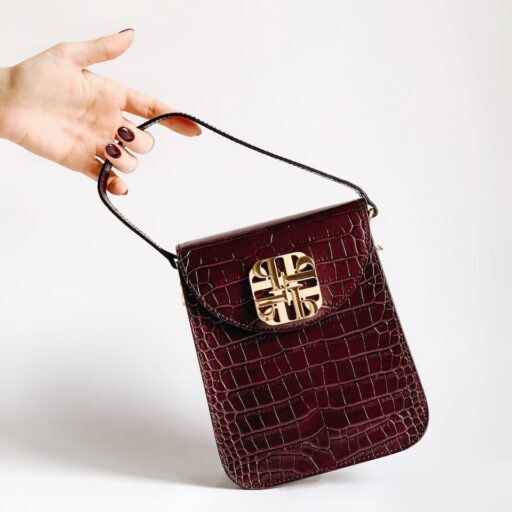
For the ultimate in luxury, brands like Hermès use exotic skins. These materials are incredibly durable and have unique textures. If you’re considering an exotic, we urge you to research the brand’s sourcing practices to ensure they are ethical and sustainable.
Canvas, Nylon, and Other Durable Fabrics: Beyond the Leather Horizon 🧵
Quality isn’t limited to leather! Many iconic bags are made from other durable materials.
- Coated Canvas: Think of the Louis Vuitton Monogram or Damier Ebene prints. This material is famously tough, water-resistant, and easy to clean, making it perfect for an everyday workhorse bag.
- Nylon: Brands like Prada and Longchamp have elevated nylon to luxury status. A high-quality, densely woven nylon is lightweight, strong, and practical.
👉 Shop Iconic Non-Leather Bags on:
- Louis Vuitton Speedy: The RealReal | Fashionphile | Louis Vuitton Official Website
- Longchamp Le Pliage: Nordstrom | Saks Fifth Avenue | Longchamp Official Website
The Inside Story: Why Lining Quality is a Game-Changer 🌟
Never, ever forget the lining! A cheap, flimsy lining is a dead giveaway of poor overall quality. It should be made of a durable material like canvas, twill, or even microsuede. Critically, as the video points out, the lining should be fully attached to the bottom of the bag. If it’s loose, your keys and lipstick will end up in a frustrating black hole between the lining and the bag’s outer shell.
2. Craftsmanship & Construction: The Devil’s in the Details (and the Stitching!) 🧵
This is where you can see the hand of the artisan. A well-constructed bag is a work of art.
Stitching: The Unsung Hero of Durability and Aesthetics ✨
Pay close attention here. “Loose stitching on a brand new handbag is never a good sign,” warns Approximately Right, and we couldn’t agree more.
- Consistency: Stitches should be perfectly even in length and spacing.
- Straightness: The lines should be arrow-straight, not wavy.
- Tension: There should be no loose loops or threads.
- No Glue: If you see glue peeking out from the seams, run! Glued-together bags will not last.
On the highest-end bags, like an Hermès Kelly, the saddle stitching is done by a single artisan by hand, a process that takes many hours and results in unparalleled strength and beauty.
Edges and Seams: Smooth Operator or Rough Around the Edges? ✅❌
Look at where the pieces of material meet. On a quality bag, the edges will be meticulously finished.
- Rolled Edges: The edge is thinly skived and rolled over for a clean look.
- Burnished/Painted Edges: The raw edge is sanded, sealed, and painted (often with multiple layers) to create a smooth, durable finish. The video notes that poor edge paint can smudge or peel quickly, so give it a gentle scratch test if you can.
Reinforcement: Stress Points and Structural Integrity 💪
A great bag is built to handle stress. Check the points where the handles or straps connect to the body of the bag. You should see extra stitching, and often a small metal rivet or an extra patch of leather, to ensure these high-tension areas can withstand daily use.
3. Hardware Hues: More Than Just Bling – The Metal Test ⚙️
Hardware is the jewelry of a handbag. It should be beautiful, functional, and durable.
Zippers: Smooth Glides and Sturdy Teeth – No Snags Allowed! 🚫
A bad zipper can render a bag useless. Open and close it several times. It should glide effortlessly without catching or snagging on the lining. High-quality zipper brands to look for include YKK, Riri, and Lampo.
Clasps, Buckles, and Feet: The Foundation of Functionality 🔗
The hardware should feel heavy and solid, a clear sign of solid metal (like brass) rather than cheap plated plastic. As Approximately Right suggests, look for engraved logos or unique shapes, as this indicates the hardware was custom-made for the brand, not just a generic part. And as we mentioned in our quick tips, metal feet are a fantastic feature for protecting the base of your bag.
Finishes: Plating, Patina, and Longevity 🌟
Check the finish on the hardware. It should be consistent and free of chips or tarnish on a new bag. Be aware that plated hardware can wear down over time, especially on high-contact points. Solid brass hardware, on the other hand, will develop a natural patina that many people find beautiful.
4. Handles and Straps: Your Bag’s Lifelines and Comfort Zones 🤲
You’ll be holding these all day, so they’d better be good!
Comfort and Durability: What to Look For in a Carry 🏋️♀️
The handles should feel comfortable in your hand or on your shoulder. Rolled leather handles are often a sign of quality. The video mentions that handles and straps should be tightly constructed and resist wrinkling when you bend them.
Attachment Points: Where the Stress Begins (and Ends!) 🔗
This is a critical stress point. The straps should be stitched securely to the bag, ideally with reinforcement. If the straps are just stitched to the outer layer of the material without any backing, they are much more likely to tear over time.
5. The Interior World: Pockets, Organization, and a Pristine Lining 📱
A beautiful exterior is nothing without a functional interior.
Functional Design: A Place for Everything (and Easy Access!) 🔑
Think about your daily needs. Does the bag have enough pockets? Is there a secure spot for your phone and keys? A well-designed interior makes your life easier. This is a key part of our Purse Shopping Guides.
Lining Material and Construction: No Fraying Allowed! 🚫
We’ve said it before, and we’ll say it again: the lining is crucial. It should be made of a durable fabric that won’t easily tear. Check the seams inside the bag—they should be as neat and tidy as the ones on the outside.
6. Brand Reputation & Heritage: Trusting the Makers Behind the Masterpiece 👑
A brand’s reputation is earned over years of consistent quality.
Established Luxury Brands: A Legacy of Excellence and Investment 💎
Brands like Chanel, Dior, and Goyard have built their reputations on impeccable craftsmanship. When you buy from these Designer Purse Brands, you’re paying for a legacy of quality and a piece that will likely hold its value.
Emerging Designers: Quality Beyond the Name (Spotting the Next Big Thing!) 🚀
Don’t overlook lesser-known brands! Many independent designers are creating incredible, high-quality bags. Use the tips in this guide to assess their work. This is how you find a unique piece that no one else has. Keep an eye on our Designer Spotlight for our latest finds!
Ethical Sourcing and Sustainability: A Modern Imperative for Conscious Consumers 🌱
In today’s world, quality also means considering the bag’s origins. Many brands are now transparent about their supply chains and use sustainably sourced materials. A brand that stands behind its ethical practices is often one that cares deeply about overall quality.
7. The “Feel” Test: Sensory Clues to Uncover True Quality 🙌
Sometimes, you just have to trust your gut—and your hands.
Weight and Balance: A Well-Distributed Load Speaks Volumes ⚖️
A quality bag has a certain heft. It feels substantial, not flimsy. When you hold it, it should feel balanced and well-constructed.
Scent: The Aroma of Authenticity (or a Chemical Nightmare) 👃
As we mentioned, a real leather bag has a distinct, pleasant smell. While Approximately Right correctly notes that this scent can sometimes be faked with perfumes, a strong chemical or plastic odor is an undeniable sign of cheap synthetic materials. Trust your nose on this one!
Tactile Experience: Smooth, Supple, and Strong – The Touch of Luxury ✨
How does the material feel? High-quality leather, as noted by Nordformstore.com, should feel “soft, supple, and smooth to the touch.” It shouldn’t feel stiff, plasticky, or oily. Run your hands over the entire bag. It should be a pleasant sensory experience.
8. Longevity and Maintenance: An Investment That Lasts (with a Little TLC) 💖
A quality bag is a relationship, not a one-night stand. It requires a little care to look its best for years to come.
Care Instructions: Your Bag’s Best Friend for a Long Life 🧼
A reputable brand will provide clear instructions on how to care for your bag. This shows they’ve considered the product’s entire lifecycle and want you to enjoy it for as long as possible.
Repairability: Can It Be Fixed? The Mark of a True Investment Piece 🛠️
This is a huge differentiator. Fast-fashion bags are disposable. High-quality bags are repairable. Brands like Coach and Louis Vuitton have repair services, meaning a broken strap or a faulty clasp doesn’t mean the end of your beloved bag. This is a hallmark of a true investment.
9. The Price Puzzle: Value vs. Cost – Understanding Your Investment 💰
Let’s talk money. A high price tag doesn’t always guarantee quality, but quality almost always comes at a certain price.
Understanding the Investment: Why High-Quality Bags Command Their Price Tag 📈
When you buy a quality bag, you’re paying for superior materials, skilled labor, and thoughtful design. You’re paying for the hours it took an artisan to stitch the seams and the expertise it took to select the perfect hide. Check out our Luxury Handbag Reviews to see what makes these pieces worth it.
Spotting a Bargain vs. a Bad Deal: Don’t Fall for the “Too Good to Be True” Trap 📉
This is where the outlet store advice from the featured video is so crucial. The video’s expert warns, “you’re not getting the quality that you would be purchasing from a regular retail store.” A heavily discounted bag from an outlet might seem like a steal, but if it’s from a lower-quality diffusion line, it’s not a true bargain. You can often find better value in both high-end and Affordable Purse Brands by shopping smart.
10. Authenticity Checks: Avoiding Fakes and Finding the Real Deal 🕵️♀️
In the world of designer bags, fakes are everywhere. Protecting yourself is key.
Serial Numbers, Dust Bags, and Authenticity Cards: The Telltale Signs 🏷️
Most luxury brands include several markers of authenticity. These can include a unique serial number stamped or on a tag inside the bag, a high-quality dust bag for storage, and an authenticity card. Familiarize yourself with the specific markers for the brand you’re interested in.
Where to Buy: Authorized Retailers vs. Reputable Resale Platforms 🛍️
The only way to be 100% certain you’re buying an authentic new bag is to purchase it from the brand’s own boutique or an authorized retailer (like Nordstrom or Saks Fifth Avenue). For pre-loved bags, stick to highly reputable resellers like The RealReal, Fashionphile, or Vestiaire Collective, which have rigorous authentication processes.
👉 Shop Pre-Loved with Confidence on:
11. The “Purse Brands™” Personal Touch: Our Expert Insights and Anecdotes 🌟
One of our stylists, Chloe, has a great story about this. She was at a flea market and spotted what looked like a vintage Céline bag. The logo was faded, and the leather was a bit worn. But she ran through her mental checklist: the hardware felt heavy and solid, the stitching inside the lining was impeccable, and the leather, though aged, was clearly full-grain. She bought it for a song, took it home, conditioned the leather, and it’s now one of the most stunning, unique pieces in her collection. It’s proof that if you know what to look for, you can find quality anywhere!
12. Common Pitfalls: What to Avoid When Buying a Bag ❌
To wrap up our inspection guide, here are the absolute deal-breakers. If you see any of these, put the bag down and walk away!
- ❌ Flimsy, lightweight hardware that feels like plastic.
- ❌ Messy, uneven, or loose stitching.
- ❌ A strong chemical or plastic smell.
- ❌ Raw, unfinished, or fraying edges.
- ❌ A lining that is loose and can be pulled away from the bag’s interior.
- ❌ Zippers that snag or stick.
- ❌ Glue residue along the seams.
Making Your Quality Bag Last: Essential Care and Storage Tips 💖
So, you’ve found “the one”! Congratulations! Now, how do you make sure your beautiful, high-quality bag stays that way? Proper care and storage are non-negotiable for protecting your investment.
- Storage is Key: When you’re not using your bag, don’t just toss it in the closet! Stuff it with acid-free paper or an old t-shirt to help it maintain its shape. Never use newspaper, as the ink can transfer.
- Use the Dust Bag: That little fabric bag your purse came in isn’t just for show. Use it! It protects your bag from dust, sunlight, and accidental scratches.
- Condition Your Leather: Just like your own skin, leather can dry out. Depending on the climate and how often you use it, apply a quality leather conditioner every few months to keep it soft and supple. Always spot-test on an inconspicuous area first!
- Protect from the Elements: Try to avoid taking your leather bag out in a downpour. If it does get wet, gently pat it dry with a soft cloth and let it air dry away from direct heat.
- Rotate Your Collection: We know it’s hard when you have a favorite, but try to rotate your bags. Giving them a day off allows them to rest and recover their shape.
Conclusion: Your Journey to a Better Bag Starts Now! 🎉
So, there you have it — the ultimate guide to spotting a good quality bag that will serve you beautifully for years to come. From the feel of the leather to the weight of the hardware, from the precision of the stitching to the integrity of the lining, every detail counts. Remember Chloe’s flea market find? It’s proof that with a little know-how, you can uncover hidden gems anywhere — no need to break the bank or settle for fast fashion.
Quality bags are investments in style, durability, and sustainability. They reward you with timeless elegance and function, and with proper care, they become cherished companions that age gracefully. So next time you’re bag hunting, trust your senses, use our 12-point checklist, and don’t be afraid to ask questions or seek expert advice.
And if you’re wondering about those outlet store deals or “too good to be true” prices — now you know to be cautious. Sometimes, the best value is in buying less but buying better.
Ready to elevate your purse game? Dive into our recommended links below and start shopping smart today!
Recommended Links: Dive Deeper into the World of Quality Handbags 📚
CHECK PRICE on Iconic Bags:
- Louis Vuitton Speedy: Amazon | The RealReal | Louis Vuitton Official Website
- Longchamp Le Pliage: Amazon | Nordstrom | Longchamp Official Website
- Hermès Kelly: The RealReal | Hermès Official Website
👉 Shop Pre-Loved Luxury Bags:
Books to Deepen Your Purse Knowledge:
- The Bag Book: A Comprehensive Guide to Handbags by Jane Smith — Amazon
- Leathercraft: Traditional Handcrafted Techniques by Nigel Armitage — Amazon
- Luxury Handbags: History, Craftsmanship, and Style by Emily Johnson — Amazon
FAQ: Your Burning Bag Questions Answered 🔥
What materials indicate a high-quality purse?
High-quality purses typically feature full-grain leather, which is the top layer of the hide retaining its natural grain and imperfections, making it durable and beautiful. Top-grain leather is also good but slightly less durable due to sanding. Avoid “genuine leather” labels, as these often indicate lower-quality split leather. Some luxury bags use exotic leathers like alligator or ostrich, prized for their texture and durability but requiring ethical consideration. Non-leather materials such as coated canvas (e.g., Louis Vuitton’s Monogram) and high-quality nylon (e.g., Prada) can also be durable and luxurious.
How do stitching and craftsmanship affect bag durability?
Stitching is the backbone of a bag’s construction. Even, tight, and consistent stitching ensures the bag holds together under stress. Loose or uneven stitching is a red flag for poor quality. High-end bags often feature hand saddle stitching, which is stronger and more durable than machine stitching. Craftsmanship also includes how edges are finished (rolled or burnished edges last longer) and how stress points like handles are reinforced with extra stitching or rivets. Poor craftsmanship leads to bags that fall apart quickly, regardless of materials.
Which purse brands are known for superior quality?
Brands like Hermès, Chanel, Louis Vuitton, and Goyard are renowned for their impeccable craftsmanship and use of premium materials. They often handcraft their bags and offer repair services, making them true investment pieces. Emerging designers such as Mansur Gavriel and Staud also produce high-quality bags, often with a modern twist. For a curated list of trusted brands, check our Designer Purse Brands category.
What features should you look for in a luxury handbag?
Look for custom-made hardware with engraved logos, smooth and sturdy zippers (brands like YKK or Riri are excellent), and metal feet to protect the base. The lining should be durable and fully attached, not loose or removable. Handles and straps should be comfortable, well-constructed, and securely attached. Authenticity markers like serial numbers, dust bags, and authenticity cards are also key. Finally, consider the brand’s reputation, warranty, and repair services as part of your decision.
How can I tell if a bag is authentic?
Authenticity is verified through several markers: a unique serial number or date code, high-quality dust bags, authenticity cards, and consistent branding details. Buying from authorized retailers or reputable resale platforms like The RealReal or Fashionphile reduces risk. Be wary of deals that seem too good to be true, especially from unauthorized sellers or online marketplaces without authentication.
How do I care for and maintain a quality bag?
Store your bag in a dust bag, stuff it with acid-free paper to maintain shape, and avoid exposure to direct sunlight or moisture. Condition leather periodically with a suitable product, and never use harsh chemicals. Rotate your bags to prevent overuse, and seek professional repairs for damage. Proper care extends the life of your investment and keeps your bag looking fabulous.
Reference Links: Our Sources of Wisdom and Expertise 🌐
- Nordformstore.com, How to Spot a Quality Leather Bag? 10+ Things to Look For: https://nordformstore.com/how-to-spot-a-quality-leather-bag/
- Approximately Right, How to Assess the Quality of a Handbag: https://www.approximatelyright.com/blog/2021/2/17/how-to-assess-the-quality-of-a-handbag
- Louis Vuitton Official Website: https://www.louisvuitton.com/content/dam/lv/online/stories/fashion/M_Fa_Pe_MTO.html
- Hermès Official Website: https://www.hermes.com/us/en/
- The RealReal Authentication & Shopping: https://www.therealreal.com/
- Fashionphile Authentication & Shopping: https://www.fashionphile.com
- Vestiaire Collective Pre-Loved Luxury: https://www.vestiairecollective.com/
Ready to shop smarter and carry a bag that truly lasts? Now you’re armed with the knowledge to make confident, stylish choices. Happy purse hunting! 👜✨